
No products in the cart.

Japan History
Warriors of Stealth – Japan’s Most Famous Ninja Warriors during the Feudal Period

15
Jul
Jul
Japan’s Most Famous Ninja Warriors
For every military historian, Ninja warriors will always be a great mystery of Japan. The term appears in historical accounts linked to stealth. It also appears in things related to data gathering, or secret assassinations.
A lot of opportune deaths are almost entirely linked to Ninja activities. Yet due to their secrecy, it was impossible to prove this theory.
The way of these warriors was an unavoidable part of the warfare of Samurai warriors. None of them could also ignore the Ninja for being a secret threat in their missions. It was because the stealth warriors could ruin all their fool-proof plans with ease.
With that, the Ninja were both feared and used for a variety of missions. Yet the Samurai seemed to despise their ways which contrasted their code of behavior.
It may be because the Ninja came from lower social classes. Plus, their stealth and secretive methods opposed the ideals of a noble Samurai.
Despite living in the shadows, a few Ninja have stood out due to their skills and expertise. They were the epitomes of their craft, whose legacy continues to live in the Japanese culture.
Who is Hanzo Hattori?
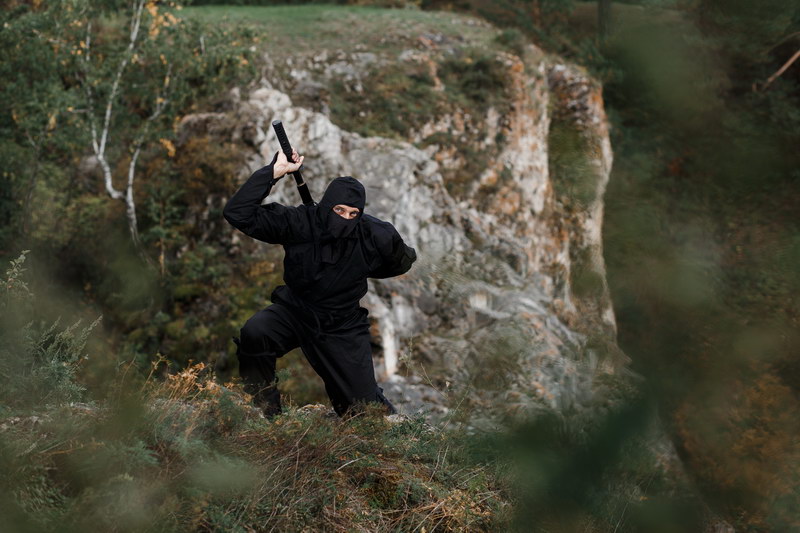
The family of Hanzo Hattori were of the Samurai class from the Iga domain. Yet he lived in Mikawa to serve as a Ninja warrior instead. He also led and commanded the Shinobi of Iga.
He was most known for saving Tokugawa Ieyasu, bringing him to safety right after the death of Oda Nobunaga in 1582. Hattori brought Tokugawa across Koga and Iga while being assisted by the few survivors of Ninja clans.
Some also claim that he helped the recovery of Tokugawa’s family who was captured by a rivaling clan. Hattori Hanzo died at the age of 55 in 1596, yet until today, his legend still lives.
Ishikawa Goemon – Japan’s Robin Hood?

In many tales, Ishikawa Goemon was portrayed like the Japanese version of Robin Hood. The difference is that he was a real historical figure and thief from a Samurai clan.
They served the Miyoshi family from Iga, and he trained as a great Ninja warrior under Momochi Sandayu.
Goemon most likely left Iga after the invasion of Oda, yet there was another story to this. It is said that he had an affair with Momochi’s mistress, and had to escape from his master’s anger.
In this story, Goemon also stole his master’s favorite sword when he fled.
He spent around 15 years robbing wealthy merchants, Daimyo, and even rich temples. Though there aren’t any claims that he shared spoils with peasants as Robin Hood did.
In 1594, Goemon tried to kill Toyotomi Hideyoshi to avenge his wife. Yet he was executed by boiling in a cauldron at the Nanzenji Temple gate in Kyoto.
Another version of this story was that his 5-year-old son was also thrown in the cauldron. But Goemon managed to lift the boy above his head, saving him from being boiled alive.
Hideyoshi pitied the child and instead, had him rescued while his father, executed.
Mochizuki Chiyome
Samurai Hoodies
Sale!

Original price was: $69.$58Current price is: $58.


Sale!

Original price was: $69.$58Current price is: $58.

Clothing


Sale!

Original price was: $69.$58Current price is: $58.
Sale!

Original price was: $69.$58Current price is: $58.


Clothing
Sale!

Original price was: $69.$58Current price is: $58.
Mochizuki Chiyome was the wife of Mochizuki Nobumasa, a Samurai from Shinano, who died in the year 1575 in the Battle of Nagashino. Chiyome was also from the Ninja clan of Koga, giving her Shinobi roots.
After the death of Nobumasa, Chiyome stayed with his uncle. This was the Daimyo of Shinano, Takeda Shingen.
He asked Chiyome to create an operative of Kunoichi or female Ninja warriors. Their primary role was to spy, send messages, or even assassinate when necessary.
There, Chiyome recruited females who were refugees, orphans, or those sold to prostitution. She trained them in the secrets and skills of the Ninja warriors.
The Kunoichi disguised themselves as Shinto shamans who moved to different places. They dressed up as prostitutes, actresses, or even geisha to infiltrate places. It was also much easier to track and find their targets in such disguises.
At its peak, Chiyome’s Kunoichi reached a total of 200 to 300 women. This gave Takeda a great advantage when it came to dealing with other domains.
Momochi Sandayu – Dead or Alive?

Momochi Sandayu was once the leader of the Iga Ninja warriors. This was during the second half of the sixteenth century. Based on records, he died during the invasion of Iga.
Despite this, legends say that Momochi escaped then lived his days as a farmer in Kii. He retired from living a life of violence and chose a pastoral existence far from wars and conflict.
Momochi is a man known for teaching Ninjutsu and states that it should be an art used as a last resort. He also claims that the practice is only for saving a Ninja’s life. It serves as an aid to his or her land, or to serve their chosen lord.
Fujibayashi Nagato
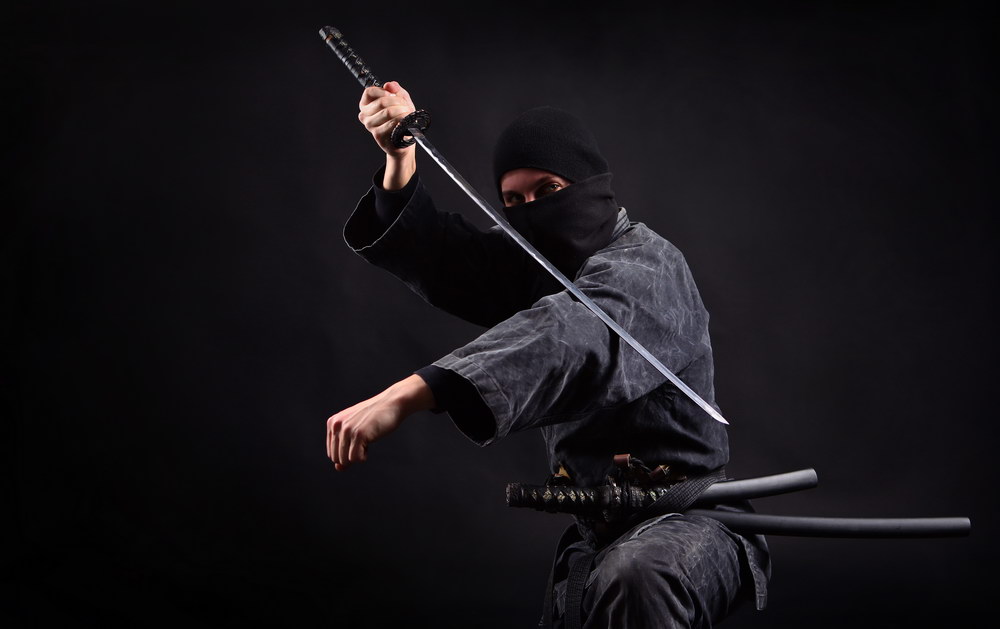
Fujibayashi Nagato was once the leader of the Iga in the 16th century. He and his followers often served the Daimyo of Oomi during his battles against Nobunaga.
The support for his enemies later prompted Oda to attack Iga and Koga. He attempted to completely obliterate the Ninja clans completely. Despite his attempts, a lot of the Ninja warriors fled to preserve their culture.
His clan took steps to guarantee that the Ninja warrior’s lore and techniques wouldn’t die. Fujibayashi Yasatake, his descendant, would compile all the Bansen Shukai.
Fuma Kotaro – Was he the Cause of Hanzo’s Death?
V Neck Samurai T-Shirts

$32
Sale!

Original price was: $38.$28Current price is: $28.
Sale!

Original price was: $38.$28Current price is: $28.


$32

Clothing
$32
Sale!

Clothing
Original price was: $38.$28Current price is: $28.

$32

$32
Sale!

Clothing
Original price was: $38.$28Current price is: $28.
Sale!

Original price was: $38.$28Current price is: $28.
Fuma Kotaro was the adopted name of the Fuma clan’s leader in the Sengoku period. Based on records, his original name was Kazama.
Theirs was a clan based in Kanagawa, and they specialized in horseback guerrilla. They were also masters in naval espionage.
Based on some sources, the clan has roots all the way back to the tenth century, where the clan served Taira no Masakado. This was during his defection against the government of Kyoto.
Fuma was the fifth and most popular leader of the Fuma clan. He was born in today’s Kanagawa prefecture and became notorious as the head of the 200 Rappa.
The Mark of Historical Castles in Japan Today
Reasons Why Katana and Samurai are Inseparable
The Art of Shodo: The Way They Write
It was a group divided into four: the pirates, brigands, thieves, and burglars.
Kotaro served under the Hojo Ujimasa and Ujinao, and his most significant achievement was in the year 1580. It was the time when he infiltrated and invaded the Takeda clan’s camp under Takeda Katsuyori.
The attack caused considerable chaos in Takeda camp, leading a mass fratricide among their enemy.
In the year 1590, Toyotomi Hideyoshi attacked Odawara Castle which soon fell. This led the Hojo clan to surrender and accept defeat.
Kotaro in Legends
Legend claims that Kotaro was the reason for Hattori Hanzo’s death. It is said that he lured the other into a narrow seaway then waited for the tide. Kotaro then managed to pour oil on the water to burn Hanzo’s men and boats.
Yet Kotaro’s life ended in 1603. It was the time when Tokugawa Ieyasu sentenced the Ninja warrior to execution. He was beheaded.
So there you have it – Japan’s most famous Ninja warriors during the Feudal Period!