
No products in the cart.

Japan History
The Five Most Celebrated and Influential Foreign Samurai in Japan’s History
11
Jul
Jul
Foreign Samurai in Japan
Samurai is a very prominent historical figure of Japan. Who would have thought that foreign Samurai warriors do exist too?
In fact, they have also marked their names in Japan’s history!
There are different ways for a foreign individual to be a Samurai. One of which is, if he had the official status of Samurai after the establishment of the Tokugawa Shogunate.
Second is if the Shogunate granted him the official post of a Samurai; and if a Daisho or lord allowed a foreign individual to wear a pair of Samurai swords.
There have been few confirmed foreign Samurai. Most of them have minimal documents written about them; some have been famous and have made a name in Japan.
Today, we are going to learn the interesting story of five foreign Samurai and their journey of being a warrior.
John Henry Schnell
There are very few information known about John Henry Schnell. One certain thing is that he is from Prussia (present-day Germany).
He is an arms dealer for the first cannon and Gatling guns in Japan employed by Lord Matsudaira. He then went to Japan and disguised as a Dutch because Japan did not have diplomatic ties with Prussia at that time.
Whereas, the Dutch people enjoy their diplomatic and trade ties with Japan. Henry also served as secretary and translator to the Max von Brandt, a Prussian diplomat.
John Henry Schnell had an older brother known in Japan as General Schnell. Henry Schnell’s brother was Edward Schnell, an adventurer, and supporter of the Shogun.
While John Henry’s interest in Japan was pure business, Edward Schnell was different. Edward was more interested in Japan itself; the Japanese people and their culture.
During the Boshin War, Henry Schnell counseled the Daimyo of Nagaoka. In Aizu, on the other hand, the Schnell brothers served as a military instructor. They also became the supplier of the weapon of the Aizu forces.
Henry’s Daimyo, Matsudaira Katamori granted him the Japanese name Hiramatsu Buhei (平松武兵衛). With his services, Matsudara gave Henry the right to wear a sword, as well as a mansion in Wakamatsu.
Henry Schnell or Hiramatsu have adapted to the Japanese lifestyle. But his fashion is a bit different from others. Many have described him as a foreign Samurai wearing a Japanese kimono, overcoat and swords.
But wearing those with western trousers, and boots will never go out of style for him.
John Henry Schnell, without a doubt, made his mark in history. That is for being the first colony from Japan to reach and settle in the US.
Pretty cool right?
Wakita Naokata

Wakita Naokata was a foreign Samurai from Joseon (Korea). Born in Hansŏng (now Seoul), Wakita’s real name was Kim Yeo-Cheol. He was the son of a Joseon official.
His father and uncle died while carrying their mother to safety after the invasion of Japan. Afterwards, Ukita Hideie’s troops kidnapped Yeo-Cheol and brought him to Hideie’s wife Gō as a gift.
Gō was always sick ever since. So she had to send Wakita to her mother, Matsu. Matsu is the wife of Lord Toshinaga the Daimyo of Kaga.
It was under Matsu’s care that Wakita learned the Samurai culture. Through Matsu and Lord Toshinaga, Wakita received protection and care.
The Five Most Celebrated and Influential Foreign Samurai in Japan’s history
Sake: A Drink to Preserve Tradition
Kabuki: Wonders of Japanese Theater
As he aged later on, he became Toshinaga’s personal guard.
Wakita Naokata learned the internal house politics at his early years of his career. He had a high salary and married a beautiful woman from a prominent retainer family.
Clearly, Wakita had a flourishing life in Japan. But, Wakita grew up trying to prove to others that he belongs to the Maeda family.
To prove his worth, Wakita made an effort fighting during the Osaka Siege. Admired by his diplomatic negotiation, Wakita proved his loyalty to the Maeda clan.
Wakita is one of the most successful foreign Samurai from Korea. He rose from an orphan to having ranks within the Maeda house. Later on, Wakita became the commissioner of Kanazawa City.
Wakita Naokata’s success story has inspired many. His account of rising from nothing has led him to strive harder and achieve further in life.
Jan Joosten van Lodensteijn
Jan Joosten van Lodensteijn is also known as Yayōsu (耶楊子) in Japan. He was from the Netherlands, and one of the first Dutchmen to ever travel in Japan.
Joosten is a sailor and went to Japan aboard the Liefde. Hoping to have trading relations in the future, Liefde and the other four ships left to Japan.
By the time they arrived in Japan, only Liefde had survived, while others did not make it.
Get Your Awesome Samurai T-Shirt
Sale!
Basic T-Shirts
Original price was: $39.$28Current price is: $28.
Sale!
Basic T-Shirts
Original price was: $39.$28Current price is: $28.
Sale!
Basic T-Shirts
Original price was: $39.$28Current price is: $28.
Sale!

Basic T-Shirts
Original price was: $39.$28Current price is: $28.
Sale!
Basic T-Shirts
Original price was: $39.$28Current price is: $28.
Sale!
Basic T-Shirts
Original price was: $39.$28Current price is: $28.
Sale!
Basic T-Shirts
Original price was: $39.$28Current price is: $28.
Sale!

Basic T-Shirts
Original price was: $39.$28Current price is: $28.
Sale!
Basic T-Shirts
Original price was: $39.$28Current price is: $28.
Sale!
Basic T-Shirts
Original price was: $39.$28Current price is: $28.
Sale!
Basic T-Shirts
Original price was: $39.$28Current price is: $28.
Sale!
Basic T-Shirts
Original price was: $39.$28Current price is: $28.
Sale!
Basic T-Shirts
Original price was: $39.$28Current price is: $28.
Sale!
Basic T-Shirts
Original price was: $39.$28Current price is: $28.
Sale!
Basic T-Shirts
Original price was: $39.$28Current price is: $28.
Sale!
Original price was: $39.$28Current price is: $28.
Sale!
Basic T-Shirts
Original price was: $39.$28Current price is: $28.
Sale!
Basic T-Shirts
Original price was: $39.$28Current price is: $28.
Sale!

Basic T-Shirts
Original price was: $39.$28Current price is: $28.
Sale!
Basic T-Shirts
Original price was: $39.$28Current price is: $28.
Sale!
Basic T-Shirts
Original price was: $39.$28Current price is: $28.
Sale!
Basic T-Shirts
Original price was: $39.$28Current price is: $28.
Sale!
Basic T-Shirts
Original price was: $39.$28Current price is: $28.
Sale!
Basic T-Shirts
Original price was: $39.$28Current price is: $28.
Most of the survivors were in detention. Meanwhile, Joosten and William Adams had the opportunity to talk to Tokugawa Ieyasu. He later employed Joosten and Adams. Tokugawa hired Joosten as his interpreter.
Because of Joosten’s services, Tokugawa gave him an annual salary. He also provided Joosten with a mansion, and the opportunity to engage in foreign trade in Japan. Joosten was also permitted to marry a Japanese wife.
Tokugawa gave Joosten the rank of Katamoto or a Samurai status in the direct service of Tokugawa. Thus, giving Joosten the permission and privilege to wear the two swords of a Samurai.
His legacy is still very alive today. In fact, they named the location of his mansion, which is Yaesu, and the Tokyo Yaesu station after him. He also has a monument in Yaesu-dori dedicated to his service, and his life after he arrives in Japan.
William Adams
William Adams, or also known as Anjin or Miura Anjin, is the first English Samurai. Born from Kent, England, Adams is a navigator, merchant, and the first English man to ever travel in Japan.
Growing up, Adam has engaged to shipbuilding, for as early as twelve years old. He went to Japan, along with 4fourother ships with Jan Joosten van Lodensteijn boarding the Liefde.
They went to Japan to challenge the trading monopoly of Portuguese in the said country.
Unfortunately, they got caught up in storms, and only the ship of Liefde survived. The ship anchored off at Kyūshū, Japan. While others in detention, Adams and Joosten went to Osaka to meet Ieyasu Tokugawa.
In there, Tokugawa interrogated the two foreigners. But he mainly asked questions to Adams. Tokugawa asked Adams about Politics, Religion, and Technological things. After a while, Tokugawa showed interest in Adams’s knowledge.
Clearly, Adam had a broader knowledge in Math and most especially in Shipbuilding. So Tokugawa made Adams one of his main confidants.
Adams helped Ieyasu Tokugawa modernize his fleet. He helped to build western-style ships in Japan.
Ieyasu was very pleased with Adams’ services; in return, he awarded Adams a resident at Miura. He also gave Adams two swords, a rank Hatamoto and a status of a Samurai.
Although Adams was not a skilled fighter, he excelled in his role as an advisor to the Shogun. His knowledge of the trade, naval, and European relations matters benefited him.
An English Foreign Samurai’s Legacy
Samurai Hoodies
Clothing
Clothing
Sale!
Original price was: $69.$58Current price is: $58.
Sale!
Original price was: $69.$58Current price is: $58.
Sale!
Original price was: $69.$58Current price is: $58.
Adams really wanted to go back to England, but he was not allowed to by the Shogunate. He eventually learned to love Japan and its people.
Adams married a Japanese woman and had two beautiful children with her. He also learned to speak fluent Japanese, and later on enjoyed his status in Japan better.
Adams died at the age of 55, but his legacy still lives on. He is still remembered for his works in Japan. Even today, every June 15th, Adams is being celebrated in Japan. He even has a statue dedicated to him.
Yasuke
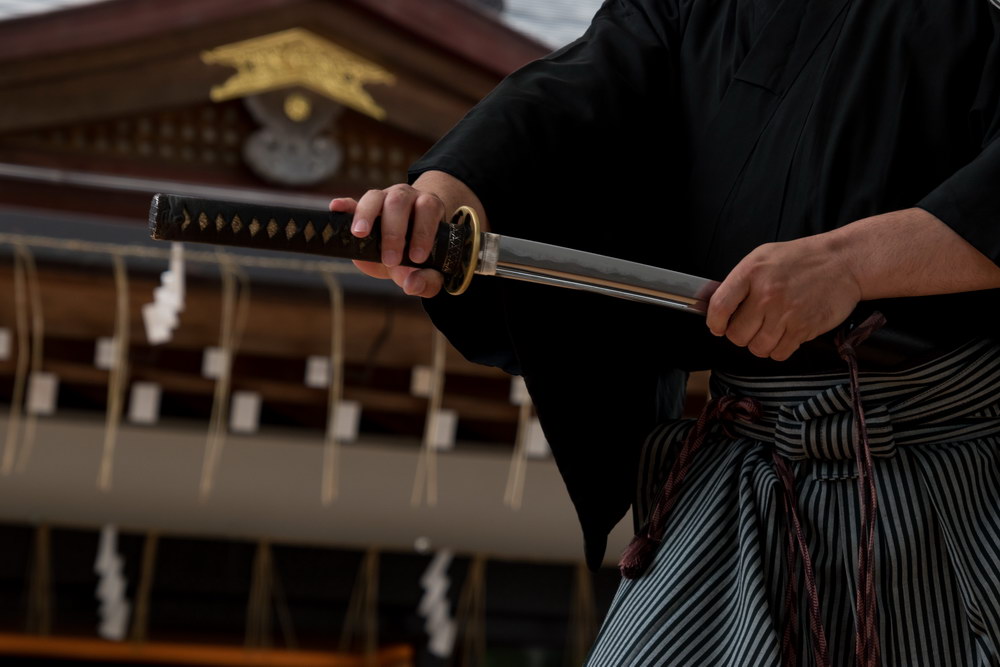
Yasuke is the first African man ever to come and visit Japan. He is also the first African foreign Samurai.
His tale and influence have surrounded Japan’s history. His mark as a warrior in Japan is forever engraved in history. Until today, he is continuously celebrated by many.
Yasuke was an African bodyguard to an Italian Jesuit Alessandro Valignano. Valignano was in-charge with developing Catholic missions in Asia.
According to some, Yasuke was an African kid sold as a child slave and trafficked to India.
Described as having the strength of ten men, Yasuke later became a confidant of Oda Nobunaga. In fact, it was Oda Nobunaga himself who granted the name Yasuke to him.
Yasuke traveled with Valignano in Tokyo to meet Nobunaga. When they arrived, hundreds of people gathered to see him closely. Most of them had never seen a black man before, so they were all amazed.
Nobunaga liked Yasuke right away. One reason is that he can speak fluent Japanese. Yasuke entertained Nobunaga with tales from Africa and India.
Yasuke has eventually become Nobunaga’s close retainer and only non-Japanese warrior. Nobunaga gave him his own house, a salary, and short ceremonial Katana. Yasuke worked as a weapon bearer to Nobunaga.
He also fought with Nobunaga against other clans. After Nobunaga’s death, Yasuke joined Nobunaga’s heir Oda Nobutada.
He also fought alongside Nobutada’s forces. Unfortunately, in the long run, he surrendered his sword to the enemy.
Yasuke’s legacy and influence is still very much alive today. His life story was even featured in different novels, films and children books.
And there you have it, folks! The five most celebrated and influential foreign Samurai that has left a mark in Japan’s history.